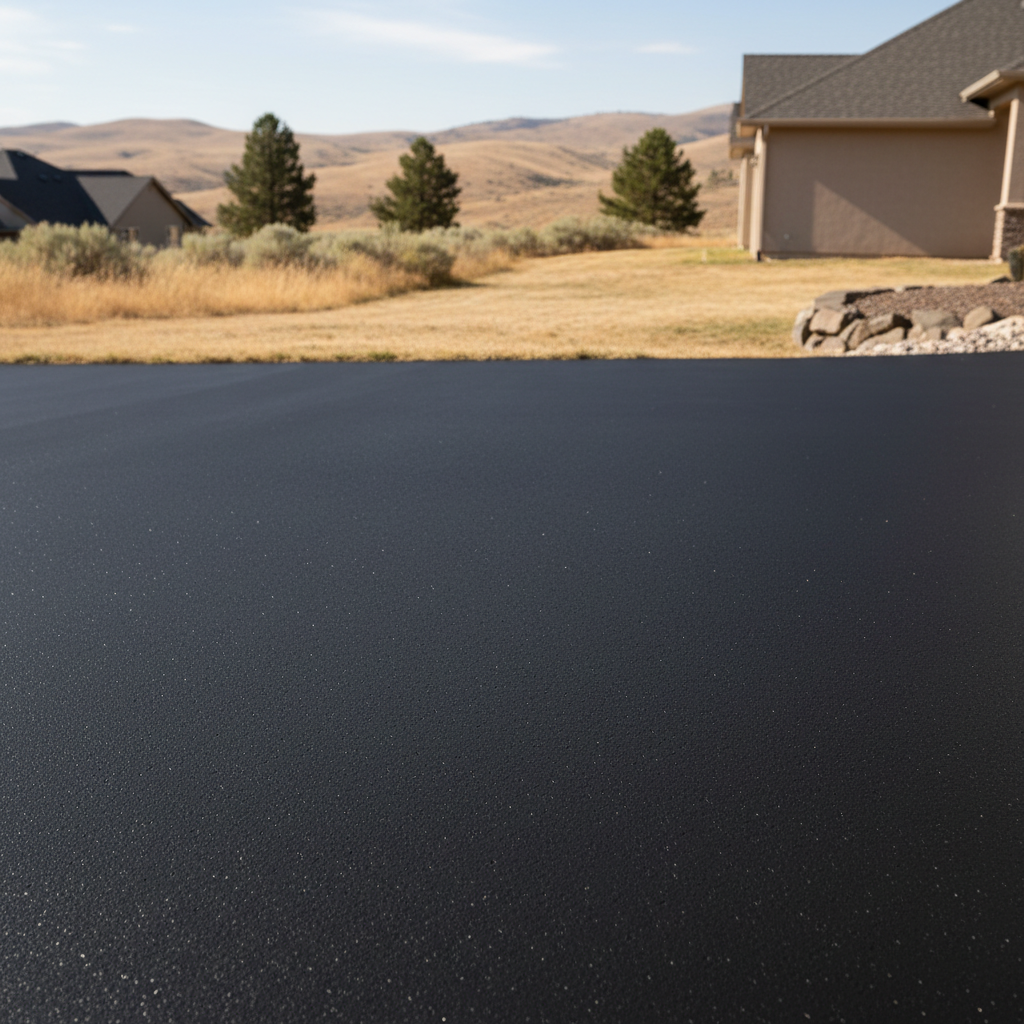
Alright, let's talk slurry coating. I get a lot of questions about this service, especially from folks here in Yakima. It's one of those things that sounds simple, but there's a bit more to it than just slapping some black stuff down. So, I figured I'd answer the most common questions I hear from homeowners, straight up, no fluff.
What exactly IS slurry coating, anyway? Is it just fancy sealcoat?
Good question, and no, it's not just fancy sealcoat. Think of slurry coating as a step up from your basic sealcoat. While sealcoat is usually just an asphalt emulsion, water, and some additives, a slurry seal adds fine aggregates – basically, very small, specially graded sand or crushed rock. This makes it thicker, more durable, and gives it a bit more body. It fills minor cracks and voids better than sealcoat alone, and it creates a new, smooth wearing surface. It's a protective layer, sure, but it also improves the structural integrity of the top layer of your asphalt.
When should I consider slurry coating instead of just sealcoating?
You'd typically lean towards slurry coating when your asphalt pavement is showing more signs of wear than what a simple sealcoat can handle, but it's not yet bad enough for an overlay or full replacement. If you've got a lot of hairline cracks, some slight raveling (where the small stones are coming loose), or just a generally rougher texture, a slurry seal is a great option. It's perfect for extending the life of a moderately aged pavement. If your driveway is still pretty new and just needs UV protection, sealcoat is fine. But if it's seen a few years and the surface is starting to look tired, that's when slurry really shines. It's a preventative measure that buys you a lot of time before bigger, more expensive repairs are needed.
How long does a slurry coating last in Yakima's climate?
That's a big one, especially with our Yakima weather. We get those hot summers that bake the asphalt, then freezing winters with snow and ice, and don't forget the freeze-thaw cycles. Generally, a properly applied slurry coat should last anywhere from 5 to 7 years, sometimes even longer if it's well-maintained and doesn't see heavy traffic every day. The quality of the existing asphalt underneath, the preparation work, and the type of aggregate used all play a part. But yeah, you can expect a good run out of it. It's a solid investment for our local conditions.
What's the process like? How long will my driveway be out of commission?
The process starts with thorough cleaning. We'll sweep, blow, and sometimes even power wash to get rid of all the dirt, debris, and loose material. Then, any larger cracks need to be filled properly. After that, we apply the slurry mix. It's usually done in one pass, spread evenly across the surface. The biggest thing for you is the curing time. You'll need to keep traffic off it completely. For pedestrian traffic, you're usually looking at 4-8 hours, but for vehicles, it's typically 24-48 hours. Sometimes a little longer if it's cooler or humid. We'll always give you a clear timeline based on the specific conditions. It's a short inconvenience for a long-lasting benefit.
Can slurry coating fix big cracks or potholes?
No, absolutely not. This is a common misunderstanding. Slurry coating is a surface treatment. It's designed to fill small, hairline cracks and improve the surface texture. It's not a structural repair. If you've got deep cracks, potholes, or areas of significant asphalt failure, those need to be repaired properly *before* any slurry coating is applied. We're talking patching, crack filling, or even cut-and-patch repairs. Putting slurry over big problems is like putting a band-aid on a broken leg – it won't hold, and you'll just be wasting your money. We always inspect the pavement first to make sure it's a good candidate.
Does slurry coating make my driveway blacker and smoother?
Yes, it definitely does both. The asphalt emulsion in the mix gives it that deep, rich black color, making your driveway look brand new and boosting your curb appeal significantly. And because it's a thicker material with fine aggregates, it fills in those minor surface imperfections, creating a much smoother, more uniform finish. It's not perfectly glass-smooth like a brand new asphalt pour, but it's a vast improvement over a worn, grayed-out surface. It also helps with drainage, as the new smooth surface sheds water more effectively.
Is it slippery when wet?
That's a fair concern. When it's first applied and curing, yes, it can be a bit slick, which is why we keep traffic off it. Once it's fully cured, the fine aggregate in the mix actually provides a good amount of texture, giving it better traction than a plain, smooth sealcoat. It's not going to be like driving on ice. In fact, it often improves the skid resistance of an older, polished asphalt surface. We use quality materials at Mighty Paving Solutions that are designed for safety and durability, even when wet.
How much does slurry coating cost compared to sealcoating or repaving?
Cost is always a factor, right? Slurry coating is definitely more expensive per square foot than a basic sealcoat, because it's a more substantial material and application process. However, it's significantly less expensive than a full asphalt overlay or, heaven forbid, a complete tear-out and repave. It sits right in the middle as a cost-effective solution for extending pavement life. Think of it as getting a lot more bang for your buck than sealcoat, without the huge investment of a full replacement. It's a smart way to maintain your property value without breaking the bank, especially when you consider how much a new driveway costs these days.
Hope that clears up some of the questions you might have about slurry coating. If you're in the Yakima area and think your driveway might be a good candidate, give us a call. We're happy to come out, take a look, and give you an honest assessment.