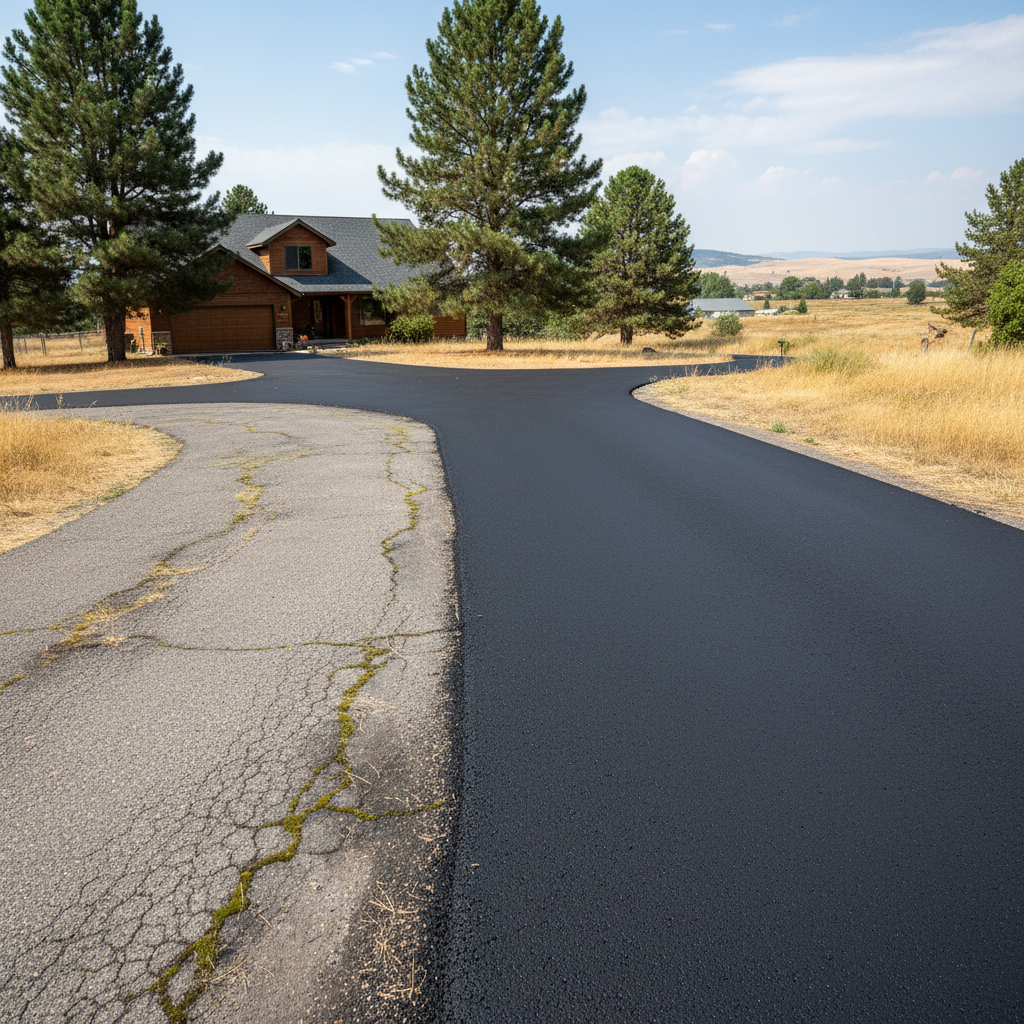
So, you're thinking about a new asphalt driveway, huh? Or maybe your old one's seen better days and you're weighing your options. Good call. A solid driveway isn't just about looks; it's about protecting your property and making life easier. Here in Yakima, with our hot summers and freezing winters, getting it right the first time saves you a ton of headaches down the road.
When it comes to residential asphalt, there are usually two main paths you can go down: a full-depth paving job or an asphalt overlay. Both have their place, but they're definitely not interchangeable. Let's talk about what each one means for your home.
Full-Depth Asphalt Paving: The Gold Standard
This is what it sounds like: we're talking about building your driveway from the ground up. Or, if you've got an existing driveway that's totally shot – I mean, cracks everywhere, potholes you could lose a small dog in, or major drainage issues – we're tearing out the old stuff completely. We'll excavate the area, lay down a proper aggregate base (that's crushed rock, usually), compact it like crazy, and then put down a fresh layer or two of hot asphalt.
The Good Stuff (Pros):
- Durability: This is the big one. A full-depth driveway, properly installed, is built to last. We're talking 20-30 years, easy, especially if you keep up with basic maintenance. It's designed to handle heavy loads and our local weather cycles without flinching.
- Foundation: You're getting a brand-new, stable foundation. This is crucial if your current ground is soft, uneven, or has poor drainage. We can correct subgrade problems before they become surface problems.
- Appearance: It's a completely fresh start. Smooth, even, and beautiful. No old cracks or patches showing through.
- Value: A well-done full-depth asphalt driveway adds significant curb appeal and value to your home.
The Not-So-Good Stuff (Cons):
- Cost: Yeah, this is usually the biggest hurdle. It's more expensive upfront because of all the excavation, material, and labor involved.
- Time: It takes longer to complete. There's more prep work, more hauling away of old material, and more layers to install.
- Disruption: Your driveway will be out of commission for a bit longer.
Asphalt Overlay: The Smart Resurface
An overlay, sometimes called resurfacing, is when we put a new layer of asphalt right over your existing, structurally sound driveway. This is a great option if your current driveway is mostly in good shape – maybe it's got some minor cracks, fading, or just looks tired, but the base underneath is still solid. Think of it like putting a fresh coat of paint on a solid wall, rather than tearing the whole wall down.
Before we do an overlay, we'll fix any significant cracks or small potholes in the existing surface. We might even mill (grind down) certain areas to ensure proper drainage and a smooth transition. Then, we apply a tack coat (an adhesive layer) and lay down a fresh layer of hot asphalt, typically 1.5 to 2 inches thick.
The Good Stuff (Pros):
- Cost-Effective: This is the main reason folks go for an overlay. It's significantly cheaper than a full tear-out and replace because you're saving on excavation and base material.
- Faster Installation: Less prep work means we can get in and out quicker, so you're back to using your driveway sooner.
- Less Disruption: Again, because it's a quicker job, there's less impact on your daily routine.
- Appearance Boost: You still get that fresh, black, smooth look that dramatically improves your home's curb appeal.
The Not-So-Good Stuff (Cons):
- Limited Lifespan: While it looks great, an overlay generally won't last as long as a full-depth driveway. You're typically looking at 8-15 years, depending on traffic and maintenance.
- Relies on Existing Base: This is critical. If the underlying driveway has major structural issues – deep, widespread cracks, heaving, or poor drainage – an overlay is just putting a band-aid on a broken leg. Those underlying problems will eventually telegraph through the new surface.
- Increased Height: Adding a new layer of asphalt means your driveway will be slightly higher. We always check for issues with garage door clearances, drainage, and transitions to sidewalks or lawns. Sometimes, we'll need to mill down edges to make it work.
So, Which One's Right for Your Yakima Home?
It really boils down to the condition of your existing driveway and your budget. Here's how I usually break it down for folks:
- Go Full-Depth If: Your driveway is completely shot. We're talking major potholes, widespread alligator cracking (that looks like a dried-up riverbed), significant heaving, or if water is pooling in places it shouldn't. Also, if you're building a new home or want the absolute longest-lasting solution, full-depth is the way to go. Especially in areas like West Valley, where we sometimes deal with expansive clay soils, a robust base is non-negotiable.
- Consider an Overlay If: Your driveway has minor surface cracks, is faded, or just looks worn but feels solid when you drive on it. If there are only a few small, isolated potholes and the overall structure is good, an overlay can be a fantastic, cost-effective way to get years of renewed life out of it.
The best way to figure it out? Have a professional take a look. We can assess your current driveway's condition, check for underlying issues, and give you an honest recommendation based on what we see. We'll walk you through the options, answer your questions, and make sure you understand exactly what you're getting. That's what we do at Mighty Paving Solutions – help you make the best choice for your home and your wallet.
Don't just guess; get an expert opinion. It'll save you money and headaches in the long run.